

The Resources Innovation Center Leoben at Montanuniversität Leoben is home to the university’s international partnerships in the areas of sustainable science, education and industrialization. Our vision is to make a climate friendly, sustainable future in the raw materials sector.

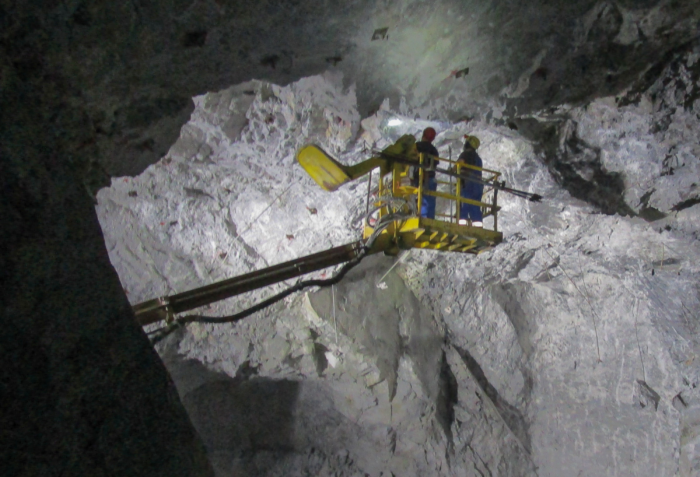
The rock mechanical assessment of underground mining structures such as drifts and tunnels is still mostly carried out manually and visually by qualified personnel. These procedures are time-consuming, prone to error, and associated with significant risks. At the same time, there is a lack of robust, networked systems that enable continuous real-time monitoring, evaluation, and response to unstable areas. The integration of digital technologies such as sensor systems, artificial intelligence (AI), autonomous robotics, and wireless communication into the complex underground environment has so far been limited.
The MineView project aims to close this gap by developing a holistic, autonomous system for rock condition assessment in underground mining. It combines multi-dimensional data acquisition (e.g. via robots, drones, and sensors embedded in rock), and AI-driven algorithms for interpretation, classification, and early warning.
Project duration: 2025 – 2028
Project partner:
On 3 June 2025, the new educational project MOSA – short for Montanuni Outdoor Science Activities – was launched. Numerous interested visitors, including pupils from the Leoben district as well as students and staff from the Montanuniversität planted 1,600 plants in carbon-enriched soil along the newly created nature trail next to the university’s research center for hydrogen and carbon.

MOSA stands for practical learning outdoors with all senses. The project brings research from the university directly to the field and demonstrates in an exciting way how resources can be used effectively. Through stations along the new nature trail, students, teachers and the interested public can interactively experience how new technologies, circular economy, biodiversity, carbon applications and renewable resources intertwine.
On the newly created area, the Montanuniversität Leoben enables active understanding of different future scenarios and thus also makes a significant contribution to the implementation of sustainable technologies.
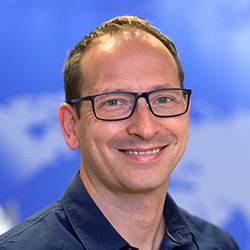
Dipl.-Ing. Robert Obenaus-Emler, a graduate in rock metallurgy from Montanuniversität Leoben, leads our activities in the area of research, development and innovation management, with a focus on direct research cooperation with industry.
Robert also leads the Montanuniversität’s strategic core research areas Raw Materials and Hydrogen and Carbon (co-lead).
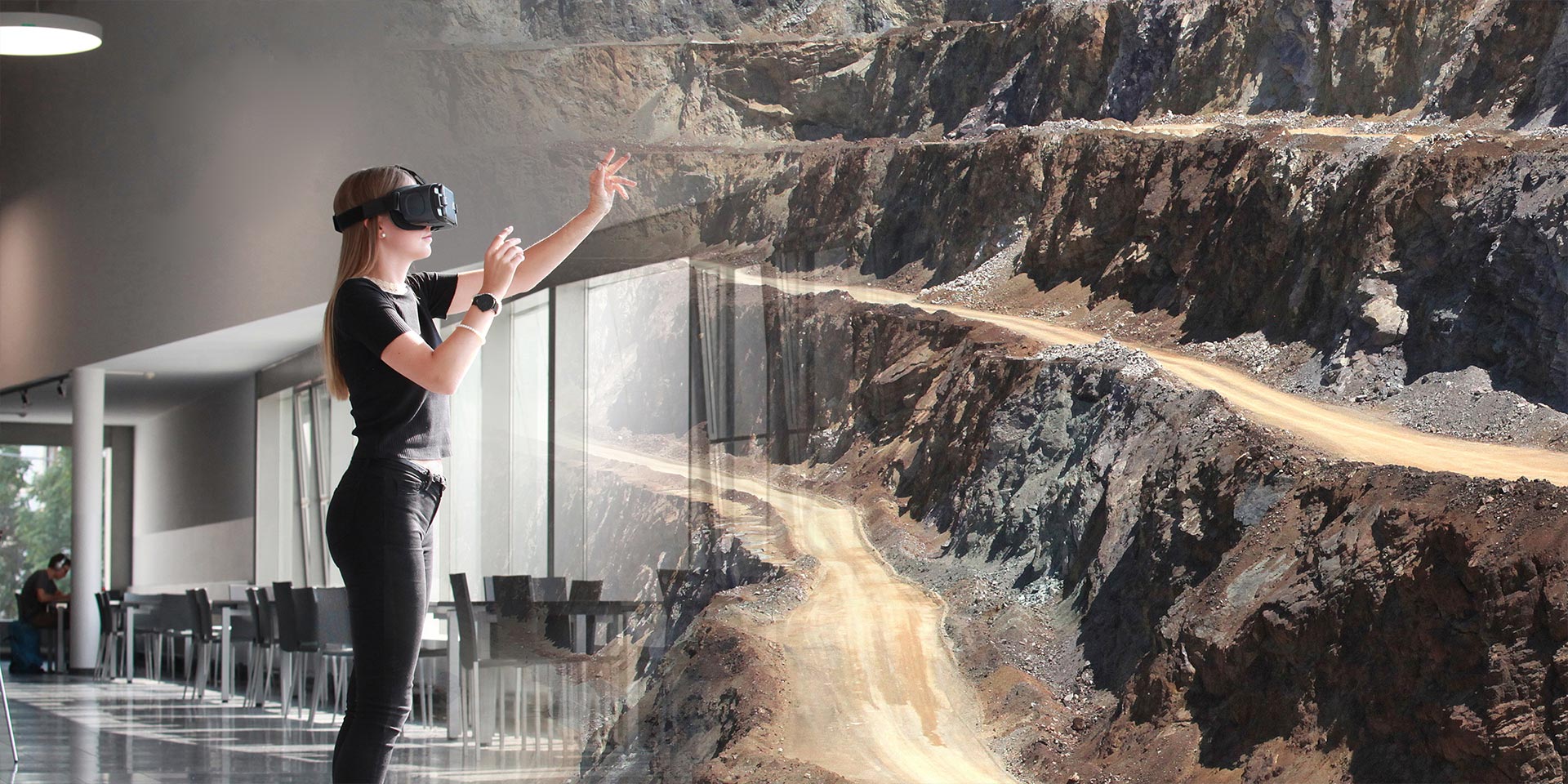
After much fine-tuning, the first edition of MiReBooks in printed form has been printed and is now available. These books will take mining education to a higher level by incorporating VR and AR elements into teaching!